About the Journal
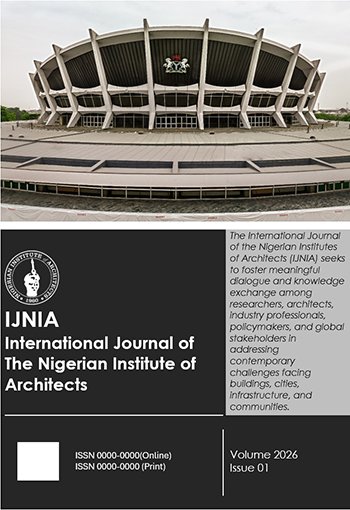
IJNIA: International Journal of The Nigerian Institute of Architects
ISSN 3156-4356 (Online)
AIM OF THE JOURNAL
The International Journal of the Nigerian Institute of Architects (IJNIA) aims to advance architectural knowledge, professional practice, and interdisciplinary research by providing an international platform for the dissemination of innovative scholarship, critical discourse, and evidence-based architectural solutions. Guided by the theme "Bridging Practice, Research, and Global Architectural Thought," the journal seeks to connect academic inquiry with professional architectural practice while fostering global perspectives that address contemporary challenges in the built environment. The journal promotes research that contributes to sustainable development, technological innovation, cultural identity, resilient urbanism, and socially responsive architecture within both local and international contexts. It encourages collaboration among academics, practitioners, policymakers, and industry professionals to generate impactful architectural knowledge capable of shaping future cities, communities, and construction practices.
Scope of the Journal
The International Journal of the Nigerian Institute of Architects (IJNIA) publishes original, peer-reviewed research articles, review papers, technical reports, case studies, theoretical discussions, and professional practice papers related to architecture, the built environment, and allied disciplines. The journal welcomes contributions from scholars, researchers, architects, planners, engineers, and industry professionals worldwide.
The scope of the journal includes, but is not limited to, the following areas:
Architecture and Design
- Architectural design theory and methods
- Contemporary architectural practice
- Housing and residential design
- Institutional, commercial, and public architecture
- Interior architecture and spatial design
- Vernacular and indigenous architecture
Sustainable and Environmental Design
- Sustainable architecture and green building
- Climate-responsive and passive design strategies
- Net-zero and low-carbon buildings
- Biomimicry and bio-inspired architectural systems
- Building performance and energy efficiency
- Circular economy and sustainable construction materials
Digital Architecture and Emerging Technologies
- Building Information Modelling (BIM)
- Artificial Intelligence (AI) in architecture and construction
- Parametric and generative design
- Digital fabrication and smart construction
- Virtual, augmented, and mixed reality applications
- Semantic technologies and ontology-based modelling
Urbanism and Built Environment Studies
- Urban design and sustainable cities
- Smart cities and digital urbanism
- Urban resilience and climate adaptation
- Infrastructure and public space design
- Informal settlements and housing policy
- Landscape architecture and ecological planning
Construction and Project Management
- Construction technology and innovation
- Project management and procurement systems
- Building lifecycle management
- Health, safety, and risk management
- Construction economics and policy
- Facilities management and asset performance
Heritage, Culture, and Society
- Architectural heritage conservation
- Cultural identity and place-making
- African architecture and postcolonial urbanism
- Social inclusion and community participation
- Architecture, ethics, and professional practice
- History and theory of architecture
Interdisciplinary and Global Perspectives
- Architecture and public health
- Architecture education and pedagogy
- Policy, governance, and regulatory frameworks
- Global architectural discourse and comparative studies
- Interdisciplinary research linking architecture with engineering, environmental science, computing, and the social sciences
The journal particularly encourages contributions that demonstrate the integration of architectural practice, academic research, and global knowledge systems to address pressing environmental, social, technological, and developmental challenges in the built environment.